What is a pole barn?
A pole barn is just a straightforward way of building that puts the strength right where it counts. The roof load travels down through large structural posts that sit on solid footers in the ground. Those posts carry the beams, the beams carry the trusses, and the trusses carry the roof steel. Then your wall girts and roof purlins give you a sturdy framework for fastening the siding. Down low, a treated skirt board keeps everything lined up and protects the base of the wall from water and wear. It’s an efficient system that uses fewer pieces than traditional framing while staying remarkably strong when it’s engineered for your property’s wind and snow loads. People use pole barns for just about anything you can imagine: garages, hobby shops, equipment storage, livestock, or a place to tinker on a Saturday afternoon. When the shell goes up straight, ventilates well, and stays dry, it’ll serve you for a long, long time.
Is a post-frame building the same thing as a pole barn?
Yes, they’re the same thing. “Post-frame” is the formal engineering name, but most folks say “pole barn” or “pole building.” No matter what you call it, it’s the same simple idea: strong columns set in the ground supporting a light, efficient roof system. Today’s post-frame structures are a far cry from the barns of years past. Laminated posts, engineered trusses, and modern bracing make the whole system straighter, stronger, and easier to build than ever before.
Does DIY Pole Barns build the barns?
No, we’re the materials and engineered-plans folks. You get a complete kit that’s designed to fit together neatly, and then you choose who puts it up. Some people gather friends for a weekend project, and others hire a local crew with the equipment to speed things along. Either way, the kit arrives ready for assembly, and if you run into a question while you’re building, we’re here by phone or email to help you keep things moving.
Can you help me find a builder?
Yes, we can. We keep a list of independent builders in our Builder Referral Network who’ve put our kits together before. You get to call them directly, ask your questions, and hire the one you feel good about. We stay focused on supplying the kit and helping you through the process. Handy Tip: When you talk with a builder, ask how they communicate during a project. Clear expectations in the beginning make for a much smoother build in the end.
What is included in a standard kit?
You receive a coordinated package where every piece has a job. The kit includes laminated posts, treated skirt boards, wall girts, roof purlins, truss carriers, and your engineered trusses. You also get G-Rib steel roofing and siding, cut to length for your building, along with a full trim package: ridge cap, eave, gable, corners, drip edge, J-channel, closures, and color-matched screws. Door and window packages can be added when you order. If you plan to insulate later, you can ask for roof underlayment and wall house wrap right up front so the shell is ready for it.
How customizable are the kits?
Quite a bit. You can choose the building size, eave height, roof pitch, and overhangs. You can add lean-tos, porches, overhead doors, sliding doors, walk doors, windows, cupolas, or wainscoting. You pick your colors, and we make sure the structure stays strong and efficient no matter how you lay it out. If you tell us what the building will be used for, we’ll help guide the design so it fits your everyday needs instead of forcing you to work around it.
What makes DIY Pole Barns different?
I’ve always believed it comes down to how you treat people. We try to keep things honest, simple, and helpful from the first quote to the last screw. A good building starts with good habits, and that includes clear drawings, quality materials, and a team that answers the phone when you need guidance. We also take pride in delivering a truly complete kit. That means the framing lumber, the trims, the closures, and even the structural screws arrive as one coordinated package designed for your site’s wind, snow, and frost loads. When things fit together cleanly, the whole project feels less stressful and more enjoyable. Underneath it all is a sense of stewardship. A barn isn’t just a structure. It’s a place where work gets done, memories get made, and a family’s plans take shape. Helping people build something solid is a responsibility we don’t take lightly.
Where do you deliver?
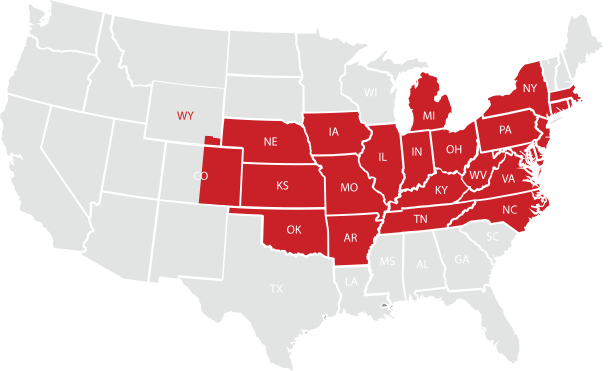
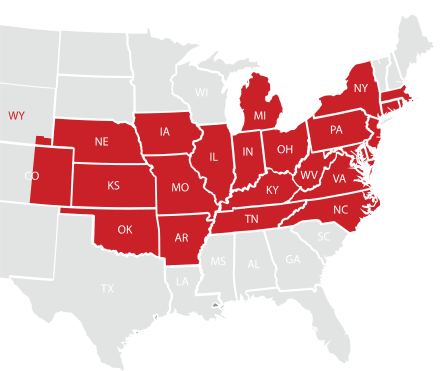
We deliver to a wide portion of the country, including Alabama, Arkansas, Colorado, Connecticut, Delaware, Georgia, Illinois, Indiana, Iowa, Kansas, Kentucky, Maryland, Massachusetts, Michigan, Missouri, Nebraska, New Hampshire, New Jersey, New York, North Carolina, Ohio, Oklahoma, Pennsylvania, Rhode Island, South Carolina, Tennessee, Vermont, Virginia, West Virginia, and Wyoming. The kit shows up on a flatbed or semi, and the driver unloads it with an all-terrain forklift. As long as your driveway and building pad are accessible, we can get your materials placed right where you need them.
Do you offer financing?
We don’t finance in-house, but we partner with lenders who specialize in post-frame projects and understand how these timelines work. You apply directly with them, choose what fits your budget, and once the funding clears, we move forward with engineering and delivery.
Is it cheaper to build it myself?
Often, yes. If you’ve got the time, the tools, and a couple of willing helpers, building it yourself saves you the labor costs and gives you the satisfaction of knowing every piece of the structure. Hiring a crew gets the job done faster and takes the heavy lifting off your plate. Many folks choose a combination: hire out the frame and roof, then handle the rest themselves. Either way, your kit is designed so the parts meet cleanly and the process stays straightforward.
What sizes are available?
We can design buildings up to 70 feet wide with eave heights up to 20 feet, and the length can run as long as you need in two-foot increments. Common sizes are 24x36 for a garage, 30x40 for a shop, 40x60 for general storage, and larger footprints like 60x120 for equipment. A good way to think about size is to picture how you will be using the space a few years from now. Consider things like trailer tongues, turning radius, and how wide you want a work area to feel. It is almost always cheaper to add a little room now than to wish for it later.
Can I add lean-tos or porches?
Yes, and they are one of the most versatile additions you can make. Lean-tos can run along one wall, both walls, or even wrap a corner. They can be enclosed or left open, depending on how you plan to use them. If you have a tall boat, camper, or livestock needs, just let us know. We can design the post layout, eave height, and pitch so the lean-to works the way you want it to.
What roof pitches are available?
Our standard roof pitches are 4/12 and 6/12. Both shed water and snow well and give the building a balanced look. If you want the inside to feel more open without changing the roofline, we can design scissor trusses. They raise the interior ceiling and create a comfortable sense of height without adding much cost.
Can I choose overhangs?
Yes. Most people select overhangs of 12, 18, or 24 inches. You can add them on the eaves, the gables, or all the way around. Overhangs help keep the weather off your walls and, with vented soffits, create a balanced airflow system that keeps the building dry. They also give the roofline a clean, finished appearance.
Can I add windows and doors through you?
Yes. We offer CHI overhead doors, sliding doors, insulated walk doors, vinyl windows, and Dutch doors. When you order your openings with your kit, we frame them into the plans and include the matching trims so everything fits together neatly. The steel siding does not come pre-cut for the openings, and that is intentional. Cutting on-site allows you to trim the steel around the framed opening precisely.
Can I get wainscoting, skylights, and interior liner panels?
Absolutely. A two-tone wall with wainscot is a popular choice because it looks sharp and protects the bottom of the wall from bumps. Interior liner panels give you a clean interior finish, especially in shops. Skylight wall panels are another way to bring in natural daylight without relying on windows down low. Everything comes with matching fasteners and trim so the building maintains a consistent, well-finished look.
Do you supply cupolas, weathervanes, and ridge vents?
Yes. Cupolas and weathervanes add a touch of traditional character, while ridge vents and vented soffits are all about performance. A ridge vent works with the soffits to move warm, moist air out of the building while pulling in drier air from below. That steady airflow is one of the best ways to protect the interior of your barn from condensation.
Can I add porch ceilings or a cathedral feel inside?
Yes. If you want a cathedral feel, you can pair taller eave heights with scissor trusses to open the inside without changing the outside lines. You can finish the ceiling with liner panels or leave it open for a more rustic atmosphere. Porches can have finished ceilings too, which help hide wiring for lights or fans and give the porch a tidy appearance. Just let us know your vision, and we will make sure the structure is set up to support it.
Can I get a pavilion-style structure?
You sure can. Post-frame construction works very well for open-sided shelters, party spaces, equipment covers, and community pavilions. The key is designing the posts, beams, and trusses so the center area stays open while the roof remains strong. We will size everything so the space feels open and dependable at the same time.
Do you design barndominiums?
No, that is not part of what we offer. We stay focused on single-level shells for shops, barns, garages, and storage buildings. If you are planning a home, many folks will build their shop or garage with us and then work with a home builder for the house itself. Keeping the disciplines separate helps ensure each part of your project gets the expertise it deserves.
What are your standard structural materials?
We use dependable, well-tested materials throughout the kit. The posts are laminated and treated at the base for in-ground use. A treated skirt board runs along the bottom of the wall for a straight starting line and added protection. Wall girts and roof purlins are premium-grade lumber spaced according to the engineered design. Your truss carriers are built from Southern Yellow Pine or LVL, layered together to reach the strength your span requires. The trusses themselves are pre-engineered for your exact wind and snow loads. On the outside, we supply 29-gauge G-Rib steel with a tough CeramaStar paint finish that holds its color well. Every kit arrives with matching trims, closures, and fasteners so the whole package fits together cleanly.
What are laminated posts and why are they used?
A laminated post is built from several boards that are pressed and bonded together so the grain works against itself instead of twisting all in one direction. That keeps the post straighter over time, which means your walls stay plumb and your doors keep swinging smoothly. The bottom section of our laminated posts is treated for direct soil contact, and that treated zone is covered under DIY Pole Barns’ limited lifetime warranty when installed according to the engineered drawings. A laminated post is simply stronger and more predictable than trying to find a perfect one-piece timber, and that reliability pays off for the life of the building.
How are posts set and protected?
Everything starts with a hole dug down past the frost line so the ground cannot lift or shift the building with the seasons. An engineered concrete footer goes in the bottom, uplift cleats are attached to the post, and the post is set directly on that footer. The hole is then backfilled with compacted gravel, which drains well and locks the base in place. If you want extra protection or prefer wood completely above grade, there are three upgrade options: Post Protectors (heavy protective sleeves wrap around the bottom portion of the post and keep soil from contacting the wood), Perma-Columns (pre-cast concrete columns with steel reinforcement that keep wood above ground), and Sturdi-Wall Brackets (for building on top of a concrete stem wall or a slab with a thickened edge). Each option works within the engineered design. The right choice depends on your soil, your building needs, and whether you want wood in the ground or not.
What footers do you recommend?
Your engineered plans will show the exact footer size required for your soil and snow load. A common footer is 24 inches wide and 8 inches thick, but yours may vary depending on the building size and ground conditions. If your site qualifies, the engineer may approve Footing Pad composite footers. If you prefer to keep all wood out of the ground, your building can also be engineered to sit on Perma-Columns or Sturdi-Wall brackets atop a concrete stem wall or slab with a thickened edge.
What trusses are included?
We supply pre-engineered wood roof trusses designed for your specific wind and snow loads. The most common roof pitches are 4/12 and 6/12, and trusses are typically spaced 4 feet apart. If you need more interior height, we can provide scissor trusses. All bracing, spacing, and fastening requirements are laid out in the engineered plans.
How are trusses fastened to the building?
We use structural screws designed for uplift and lateral forces to secure each truss to its carrier. They install cleaner and faster than older fastening methods and create a tight, long-lasting connection.
What steel do you supply for roofing and siding?
Our standard panel is a 29-gauge G-Rib steel, 36 inches wide and factory-cut to the correct lengths. A 26-gauge upgrade is available. The steel features a Galvalume substrate and a CeramaStar 1050 paint finish. Color-matched screws with sealing washers are included.
Are trim and closures included?
Yes. Your kit includes ridge cap, eave trim, gable trim, corner trim, drip edge, and J-channel for your doors and windows. Foam closures are provided where needed to keep wind, rain, and pests out of the small gaps.
What fasteners are included?
You receive color-matched screws for the steel, galvanized nails for the framing, and structural screws for your truss and carrier connections. The engineered plans show exactly where each type of fastener belongs.
What about roof and wall underlayment?
If you plan to insulate or heat the building, it is wise to add underlayment from the start. A synthetic felt under the roof steel helps control condensation, and wall house wrap helps block drafts and moisture.
What overhead doors can I order with the kit?
We can supply you with CHI overhead doors. The CHI Model 2250 is available for uninsulated spaces, and the insulated CHI Model 2283 is available for heated shops. These doors come in common widths and heights, with optional windows and color choices. Your plans will show the rough opening and include the necessary trims.
Do you offer sliding doors?
Yes. Sliding doors are a practical, economical way to create a wide opening, ideal on a long wall where you want wide entry without overhead tracks. The kit includes the metal-framed door panels, track, trolleys, guides, latches, and necessary trim. For a strong weather seal or an insulated building, an overhead door is usually the better option.
Do you supply walk doors and windows?
Yes. We offer insulated steel walk doors (including half-glass options) and vinyl windows in several common sizes (fixed or operable, with optional grids). We frame the openings and include the matching J-channel and trim. Premium windows with low-E glass are available if you plan to heat the building.
How big should my garage doors be?
Door size depends on what you move in and out. A typical car or SUV fits comfortably through a 9x8. Pickups, small tractors, and utility vehicles often call for a 10x10. Larger equipment, RVs, and taller farm machinery usually need a 12x12, 12x14, or even a 14x14. We also ensure enough clearance for the door track and any opener. Handy Tip: Pouring a small concrete apron that slopes away from the doorway helps keep wind-driven water from running under the threshold.
Can I bring my own doors or windows?
Yes. You can supply your own doors and windows without any issue. Just give us the exact sizes and locations during the design phase so we can frame the openings correctly and include the right trim.
Do you do the site prep for me?
No. We provide the building kit, and you choose the excavator or contractor who prepares your site. Local excavators are the most reliable approach as they understand your soil conditions, drainage patterns, and frost depth.
What kind of building pad do I need?
A good pad is level, compacted, extends a few feet beyond the building footprint, and is usually raised slightly above the surrounding grade for drainage. Pad material might be limestone, crushed rock, or another compactable base common in your area.
How do I deal with drainage around the building?
Ensure your building pad is crowned or raised so water moves away from the structure. After the building is up, you may add gutters to collect roof runoff and direct it away. If your property holds water, consult with your excavator about swales, French drains, or grading adjustments.
Can I build on a slope?
Yes, but building on a slope usually requires extra excavation, retaining walls, or a split-level grade, and makes construction more difficult. Most people find it more cost-effective to cut, fill, and compact a level pad.
Do you pour the concrete?
No. Your builder or a local concrete contractor takes care of pouring the concrete. We provide the foundation details, showing where posts, brackets, or stem walls go.
Should I pour the slab before or after the building is up?
You can do either, but pouring after the shell is up is the more common approach. This avoids layout challenges of pre-setting brackets and allows the concrete crew to work inside a protected structure. Pouring before requires precision to set every Sturdi-Wall bracket perfectly into a code-compliant foundation (like a thickened-edge slab or stem wall).
What kind of concrete mix should I use?
Your concrete contractor will choose the mix based on your climate and use. For a garage or shop slab, a common choice is a 4-inch to 6-inch floor with fiber reinforcement and rebar in high-stress areas. For heavy equipment, ask about thicker edges, additional reinforcement, or a higher psi mix.
Do you provide engineering for stem walls or specialty foundations?
No. We do not design or engineer custom foundation systems, retaining walls, basements, or deep footings. We only provide the foundation details necessary for the post-frame structure itself (post holes, footers, bracket connections, or specifications for Perma-Columns or Sturdi-Wall brackets).
Can I pour a slab thicker around the perimeter?
Yes. A thickened-edge slab is a popular choice for a stronger perimeter or when the building will sit on Sturdi-Wall post brackets. The engineered drawings will show the exact depth, width, and reinforcement required for Sturdi-Wall brackets.
Do you require a vapor barrier under the slab?
If you plan to heat the building, install flooring, or control moisture, a vapor barrier (a sheet of polyethylene) is a wise choice to prevent ground moisture from wicking up. Foam board insulation around the perimeter is also often paired with it for temperature control.
Do your buildings come with engineered plans?
Yes. Every DIY Pole Barns kit includes engineered drawings that show the post layout, truss details, footer sizes, bracing, and all the structural information for your location. A professional engineer’s stamp can be added for an additional fee if your county requires it.
Will your plans pass my local code requirements?
They are designed to. Our engineering team uses the code information for your county or township. The final approval always rests with your local building authority. If a revision is needed, the engineer can review the request and provide an update when appropriate.
Do you handle the permit for me?
No. You work directly with your building department to obtain your permit. We provide the engineered plans, material list, and structure details you will need for your application.
Can you tell me what my county requires for a permit?
We cannot. Building department requirements vary widely and change without notice. Your local building authority is the best source for accurate information.
Do you provide site plans or plot plans?
No. We supply the engineered design of the building itself, which is the structural portion of your permit packet. Property-specific mapping (site plans, septic layouts, utility routes, etc.) must be prepared by your surveyor, civil engineer, or builder.
Can you modify the plans to match my existing foundation?
Yes, if the foundation is a code-compliant system (like a stem wall or thickened-edge slab) that a post-frame building can sit on. You must provide details about the existing foundation for the engineer to determine if it can support the loads.
What if my inspector needs something added or changed on the plans?
If your inspector requests a structural clarification or revision, the engineer will review it and provide an updated sheet or clarification if the request is reasonable and aligns with the building code.
Do you provide engineering for basements, retaining walls, or special foundations?
No. That requires a local structural or civil engineer. Our engineering covers the post-frame building itself: the posts, footers, trusses, bracing, and structural connections.
Do I need a permit for a small building on my property?
That depends entirely on your local rules. Your building department can give you a quick answer. Even if a permit is not required, it is still important to follow proper engineering and good building practices.
How are the materials delivered?
Your kit arrives on a flatbed or semi truck operated by one of our delivery partners. The truck usually carries an all-terrain forklift (moffett) to unload and place the organized, banded, and labeled bundles close to your building pad, provided the ground is safe, level, and strong enough.
Do I need to be onsite for delivery?
It is highly recommended so you can point out where the materials should go, confirm ground conditions, and verify that everything is present. If you cannot be there, appoint someone you trust.
Can the truck access my property?
In most cases, yes. Flatbeds need room to enter, turn, and park. The moffett can navigate narrow spaces, but the truck needs a safe path. Clear low branches, mark soft areas, and ensure any culvert or bridge is strong enough for heavy equipment.
What if my driveway is too soft or too narrow for the forklift?
Solutions include spreading a temporary layer of gravel for strength or having the driver unload closer to the road for you to move the materials later. The driver will not risk getting stuck, so keep a backup plan in mind.
How long does delivery take after ordering?
Most deliveries occur within a few weeks after your plans are finalized, stamped if needed, and the order is paid for, though peak seasons can extend those timelines. We keep you updated throughout the process.
What if something arrives damaged or missing?
Take photos of any damage immediately and communicate the issue as soon as possible. We will review it and arrange replacements promptly. Having the packing list in hand during delivery makes inventory easier.
Do you deliver on weekends?
Weekend delivery is not standard and cannot be scheduled as a planned option. Most deliveries occur Monday through Friday during daylight hours.
Do you offer international delivery?
Not at this time. We deliver to our designated service-area states within the United States.
How long does it take to build a pole barn?
The timeframe depends on size, weather, and crew experience. A small garage may go up in a few days, while a larger barn can take a couple of weeks. Allow extra time for weather delays and other dependencies like concrete pouring and inspections.
Can I build it myself?
Yes. Many customers build their own pole barn. The plans are clear and components are designed to fit. Key advice is to be patient, follow the drawings, and double-check measurements. You can hire help for specific steps like setting trusses or hanging overhead doors.
Should I hire a builder instead?
Hiring a builder is a popular choice for larger projects or when time is a factor. A professional post-frame crew brings equipment, efficiency, and experience, which can save weeks of labor and reduce the risk of mistakes.
What tools and equipment do I need if I build it myself?
Minimum tools include standard carpentry tools: a circular saw, tape measure, level, builder’s string, impact driver, hammer, and ladders. For a smoother experience, a rotating laser, framing nailers, and an auger are helpful. Setting trusses safely often requires renting scaffolding, a crane truck, or a telehandler.
How are the posts installed?
Posts are set in holes below the frost line with an engineered concrete footer at the bottom and uplift cleats attached to the post. The hole is then backfilled with compacted gravel. If you choose a wood-out-of-ground system (like Sturdi-Wall brackets), the plans will show the modified installation process.
How are trusses installed?
Trusses are lifted into place using a crane or telehandler, temporarily braced, and then permanently secured with structural screws, bracing, and purlins according to the engineered drawings. Spacing is typically 4 feet on center.
How is the steel installed?
Roof steel is installed first, followed by the wall steel. Panels overlap at the ribs and attach with color-matched screws. Trim pieces are added at the eaves, ridges, corners, and around doors and windows. The steel is factory-cut to length.
Can I insulate the building?
Yes. It is best to start with roof underlayment and house wrap on the walls. You can then use fiberglass batts, spray foam, or blown-in options. If you plan to heat or cool the space, let us know upfront so the design includes proper ventilation and insulation-ready features.
Do you offer interior finishing?
Not directly. We make sure the shell is strong and square. Customers finish the inside themselves or hire a contractor with options like metal liner panels, wood, drywall, shelving, or mezzanines.
What if I get stuck during the build?
You can reach out to our team if you have a question about the plans, materials, or a particular step. We will guide you through the structural parts of the build.
How do I prevent condensation in my pole barn?
Condensation occurs when warm, moist air meets cold roof steel. The solution is two-fold:
- Good Ventilation: Vented soffits pull cooler, drier air in at the eaves, and a ridge vent lets warm, moist air escape at the peak.
- Condensation Barrier: Install a material designed to catch moisture before it drips, such as bubble-style insulation or a fiberglass-backed condensation barrier, under the roof steel.
Should I use a vapor barrier?
If you plan to heat or cool the building, a vapor barrier is almost always recommended. A sheet of polyethylene under the slab keeps ground moisture from migrating upward. A vapor barrier inside the walls helps control temperature swings and condensation in the wall cavity.
Can I insulate a pole barn like a house?
Yes, but the steps are different due to the post and girt structure instead of traditional stud walls. You can use fiberglass batts, blown-in insulation, or spray foam. For occasional heating, house wrap and batt insulation may be enough. For a year-round climate-controlled workspace, foam products and proper ventilation are recommended.
Should I insulate the ceiling or the roof?
Each approach has its place. Insulating the ceiling line is the most common method because it keeps warm air where you want it and avoids turning the entire attic space into a conditioned zone. You can then ventilate the attic naturally with soffits and a ridge vent. Insulating the roof line is useful when you want an open ceiling or when you plan to finish the interior with a cathedral or scissor-truss design. Spray foam works well here because it seals tightly against the roof steel and controls condensation without requiring an attic space. Your intended use, your budget, and the interior look you want will point you toward the best option.
What kind of insulation should I use?
There are several dependable choices:
- Fiberglass Batts: Economical and straightforward. Works well when paired with house wrap and ceiling insulation.
- Blown-In Insulation: Great for attic spaces above a finished ceiling. Provides good coverage and reduces air gaps.
- Spray Foam: Excellent for controlling air movement and moisture. A higher investment, but it delivers strong long-term performance.
- Rigid Foam Boards: Useful for slab insulation or as added thermal breaks along certain surfaces.
Each building is different. Think about how often you will heat the space, how airtight you want it to be, and how the interior will be finished.
How does ventilation work in a pole barn?
Ventilation works on a simple but reliable principle. Cooler air enters the building through vented soffits at the eaves. Warm air rises toward the peak and exits through a ridge vent. That constant upward flow keeps moisture from settling on the steel and helps regulate the temperature inside the attic space. When the ventilation system is set up properly, it reduces condensation, keeps the steel dry, and makes the building more comfortable in every season.
Do I need a ridge vent?
In most cases, yes. A ridge vent allows warm air to escape from the highest point in the roof. When paired with vented soffits, it creates a smooth stream of airflow through the attic space. This helps prevent condensation, reduces heat buildup, and protects the framing and insulation. Some small agricultural buildings or open-sided structures may not need a ridge vent, but most enclosed buildings benefit from one.
What about spray foam insulation?
Spray foam is an excellent choice when you want a tight seal, strong moisture control, and better temperature stability. It adheres directly to the steel or wood and fills every small gap. That keeps drafts down and helps prevent condensation. The main consideration is cost. Spray foam is more expensive than fiberglass or blown-in insulation. It pays off best in buildings that you plan to heat or cool regularly, or in places where you want a clean, finished interior without a ceiling system. If you want the most airtight option, spray foam is the way to go.
Do you offer cupolas and weathervanes?
Yes. Cupolas and weathervanes are available as add-ons and come in sizes that match a variety of rooflines. Besides adding character, a functional cupola with louvers can also help with passive ventilation, especially in agricultural or equipment buildings where warm air needs a place to escape. A decorative weathervane adds a nice finishing touch, and if you choose to include one, we’ll size the cupola and the mounting hardware to match your roof pitch so everything sits square and looks right.
Do you sell gutters and downspouts?
Not directly, but many customers add gutters through a local contractor after the building is up. Gutters help carry roof water away from the pad and reduce splash-back on the siding. If you’re building on a pad that sits close to neighboring structures or in an area that stays damp, gutters are one of the best long-term investments you can make. Your builder will leave the eaves ready for gutter installation by keeping the trim lines straight and accessible.
Do you provide skylights or translucent panels?
Yes. We offer skylight wall panels, which are translucent fiberglass panels installed in the walls to bring in natural daylight. They are a simple way to brighten the interior without adding electrical fixtures, especially in shops or livestock buildings used during daylight hours. We do not provide roof skylights because they introduce leak points in the roof envelope. Wall panels give you the daylight without the long-term maintenance concerns.
What hardware comes with the kit?
Your kit includes all the structural hardware needed for the frame: structural screws for trusses and carriers, galvanized nails for framing, and color-matched screws with sealing washers for the steel. For sliding doors, we include the complete track hardware: trolleys, brackets, stops, guides, and latches. Overhead doors come with their own manufacturer-supplied hardware. Any add-on package, such as walk doors or vinyl windows, includes the necessary trims and components to install them cleanly. Every piece has a purpose, and the plans show where each piece belongs.
Do you offer door locks or security hardware?
Walk doors come with standard locksets, and overhead doors include the hardware provided by the manufacturer. If you want additional security like deadbolts, padlock hasps, or reinforced frames, those are typically added on-site by the owner or builder. Security needs vary from one property to another, so the kit includes the essentials while leaving specialized options up to you.
Can I install electric openers on my overhead doors?
Yes. Most CHI overhead doors are compatible with standard electric openers. If you plan to install openers, tell us during the design stage so we can verify that your eave height, door track style, and headroom clearance are adequate. Your electrician or general builder can handle the wiring and installation once the building is framed and dried in.
Do you supply interior liner panels?
Yes. Many customers choose white steel liner panels for the interior walls or ceilings. They brighten the workspace, protect the insulation, and create a clean, finished look that holds up well to everyday use. Liner panels are especially popular in shops, garages, and hobby spaces where durability and easy cleaning matter.
Do you offer shelving, lofts, or interior storage systems?
We do not supply shelving systems, cabinets, or interior loft framing. Those components vary widely depending on how you plan to use the space. Once the shell is complete, you can add shelves, workbenches, storage platforms, or mezzanines to fit your workflow. If you plan something structural like a second-level storage platform, you will want a local contractor or engineer to verify that loads and connections meet code.
Can I add porches, overhangs, or lean-to attachments later?
Yes, although it is usually simpler and more cost-effective to include them in the initial building design. When porches or lean-tos are added later, they often require structural changes to the existing building, especially when tying into the trusses or adjusting the overhang layout. If you think a porch or lean-to might be in your future, it is wise to mention it during design. That way the structure can be prepared for it and you won’t be limited later.
Do you provide weather-sealing and trim for all openings?
Yes. Your kit includes the trim pieces and closures needed to finish overhead doors, sliding doors, windows, and walk doors. These pieces help keep out rain, snow, insects, and drafts. The trim also ties the exterior look together so the building has a clean, finished appearance. For heated spaces, additional weatherstripping or insulating techniques may be added by your builder to further tighten the building envelope.
What kind of warranty comes with the building materials?
Each component of your kit carries its own manufacturer-backed warranty. The steel panels include a finish and performance warranty on both the paint and the substrate. The laminated posts include DIY Pole Barns’ limited lifetime warranty on the treated in-ground portion, provided they are installed according to the engineered plans. Your trusses, doors, and windows each carry warranties from their respective manufacturers, and those documents are included with your order. These are specific, proven warranties based on long-term performance and industry standards.
How long will a pole barn last?
When it is built correctly and maintained well, a pole barn can last for generations. Treated laminated posts resist decay. Galvalume steel panels hold their color and strength for decades. Proper ventilation keeps the structure dry, and attention to drainage protects the foundation. Most buildings fail not because the materials wear out, but because moisture, poor grading, or deferred maintenance catch up over time. Keep the site dry, manage runoff, touch up scratches in the steel when you see them, and your pole barn will stay solid and straight long after you have forgotten what year it was built.
Do laminated posts really last as long as treated solid posts?
Yes, and in many cases, they last longer. Laminated posts are built from multiple boards bonded together, so knots and grain direction balance each other out. They resist twisting and bowing, and the bottom section is treated for in-ground use just like a traditional solid post. Because the treatment process is controlled and the post is built from kiln-dried lumber, the preservative penetrates deeply and effectively. When installed correctly, they hold up exceptionally well, which is why so many post-frame builders prefer them today.
Will the steel fade, chip, or chalk over time?
Modern steel coatings are designed to hold their color and resist the usual wear that comes with sun, moisture, and temperature swings. Our G-Rib steel panels use a CeramaStar 1050 paint system, which is known for its durability and long-term color retention. All painted steel will experience some natural weathering after many years in the sun, but with proper care and occasional cleaning, fading or chalking stays minimal. Protecting the surface from scratches during installation also goes a long way toward maintaining that fresh appearance.
What happens if something fails after construction?
If a material fails under warranty, reach out to us. We will gather the necessary information, review the issue, and work with the manufacturer to get it resolved. For items outside of warranty, or problems caused by installation or site conditions, we will still help you understand what happened and what the next steps should be. You are not left guessing or searching for answers alone. If we can help, we will, and if a problem belongs in a manufacturer’s hands, we will guide you toward the right solution.
Does a pole barn need regular maintenance?
Like any structure, a pole barn benefits from simple, routine upkeep. Keep the gutters clean, inspect the grading, make sure the downspouts carry water well away from the building, and trim back any vegetation that might trap moisture against the walls. Every year or so, take a walk around the building. Look for loose screws, small scratches in the steel, or spots where animals may have tried to nest. A few minutes of attention now and then keeps small problems from becoming big ones.
Will my pole barn add value to my property?
In most cases, yes. A well-built pole barn increases the usable space on your land, adds storage value, and appeals to buyers who need a workshop, garage, or agricultural space. The more thoughtfully you design it (windows, porches, insulation) the more value it adds. While a pole barn may not show up in property assessments the exact same way a traditional home addition does, real-world buyers almost always appreciate a functional, attractive outbuilding.
How does weather affect the building over time?
Weather is part of life. Wind, snow, sun, humidity. A properly designed post-frame building is built with that reality in mind. Engineered trusses carry snow loads. Lateral bracing resists wind. Properly treated posts handle moisture at ground level. Vented soffits and ridge vents manage the warm air that collects at the roofline. What causes problems over time is often not the weather itself, but poor site drainage, lack of airflow, or deferred maintenance. Keep the site graded, maintain your ventilation, and the building will stand up well to the elements.
What if I want to expand the building later?
Pole barns can be expanded, but the cleanest expansions happen when the original building was designed with future growth in mind. If you think you might add length or a lean-to someday, mention it during the design stage. That way we can set the truss layout, post spacing, and overhangs so you are not working against the structure later. If the building is already up, expansion is still possible. It just requires more planning and sometimes additional engineering to make sure the new structure ties in correctly.
What makes your buildings strong enough for my area?
Your plans are engineered for your specific wind load, snow load, and frost depth. That means the posts, trusses, bracing, carriers, fasteners, and footers are all sized for the conditions on your property. Nothing is guessed at. Every structural component is chosen to meet the known forces your building will face. When a structure is engineered correctly and built according to the plans, it performs reliably for decades.